2026 Ordinance Change
We are working to enforce current laws and create new protections.
August 10, 2026
Next week we will be asking the board of county commissioners to amend the critical area section of the code to close the critical area report loopholes. We be be speaking at the public comment session at 11:30am at the Board of County Commissioners meeting on August 18th.
How we got here
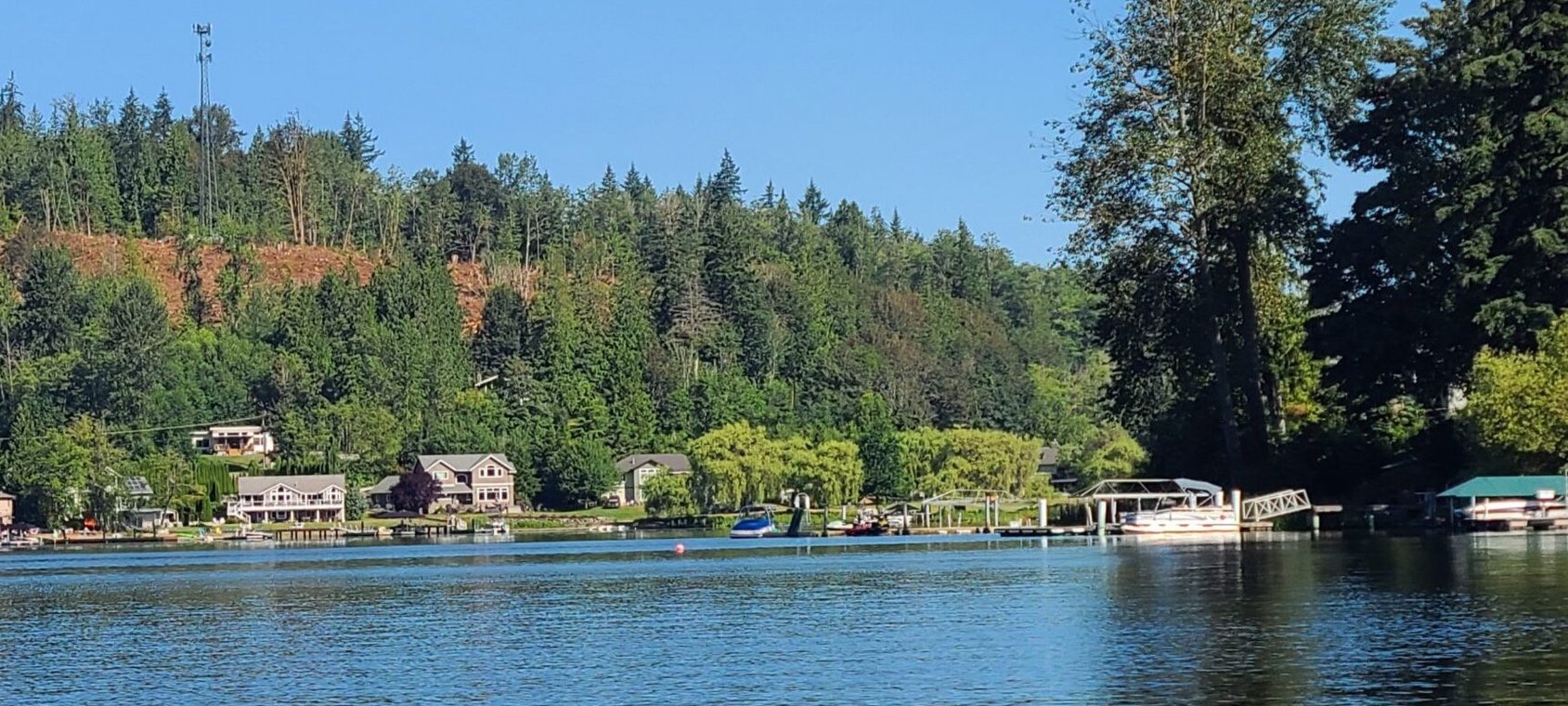
We were somewhat successful in our effort to make the County assess impacts from new development to all critical areas — not just those within 200 or 300 feet of a project — as we saw happen with Overlook Crest above Big Lake.
In response to our petition to the State Growth Management Hearings Board (GMHB), the County told GMHB that the specified distances were only a presumption, and that the Director can require the applicant to provide a critical area report by a qualified professional “whenever the facts warrant it.”
The GMHB accepted that assurance as fact. Now it is up to the community to persuade the County “to make it so.”
The loophole
The ordinance still contains language — kindly called a “loophole” — that lets the applicant avoid this burden. The County’s Critical Area Checklist and website also describe the process as looking only 200 or 300 feet from the project.
It is because of this loophole that the County approved the Overlook Crest plat in 2013, the shoreline 42″ pipe in 2024, and now the 2025 plan — with no public hearings and without any professional opinion on the impact of the project’s stormwater on Big Lake.
What to do now
Show up in person, or file a written comment by email to pdscomments@co.skagit.wa.us.
Be sure to include your name, address, and email address.
For more information, email us at add contact email or visit our Contact page.
The short version — what to tell the County
If you file a comment, keep it simple. Ask the County to close the Critical Area Report loophole — that is, to remove the provisions in the ordinance that let an applicant avoid a professional analysis of its project’s impacts on critical areas such as Big Lake when the lake is more than 200 feet from the project.
See also the long version: what needs to be done to fix the Critical Areas Ordinance.